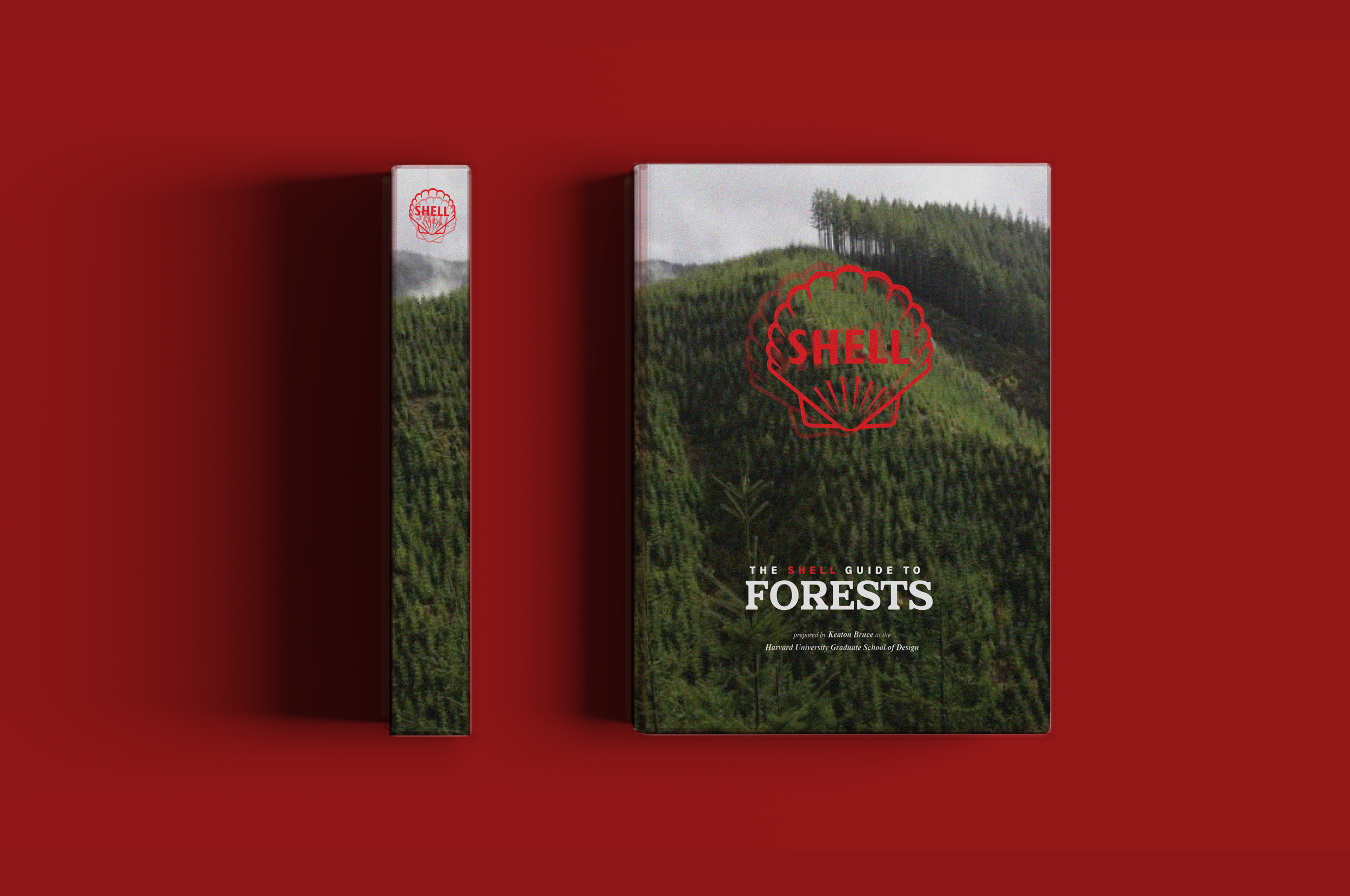
The Shell Guide to Forests
Master of Design Studies Proseminar in Ecologies: Regenerative, Interrelated, Evolving
Harvard University Graduate School of Design
Professor Alex Wall, Doctoral Tutor Marco Fiorino, Teaching Fellow Spurty Kamath
2025
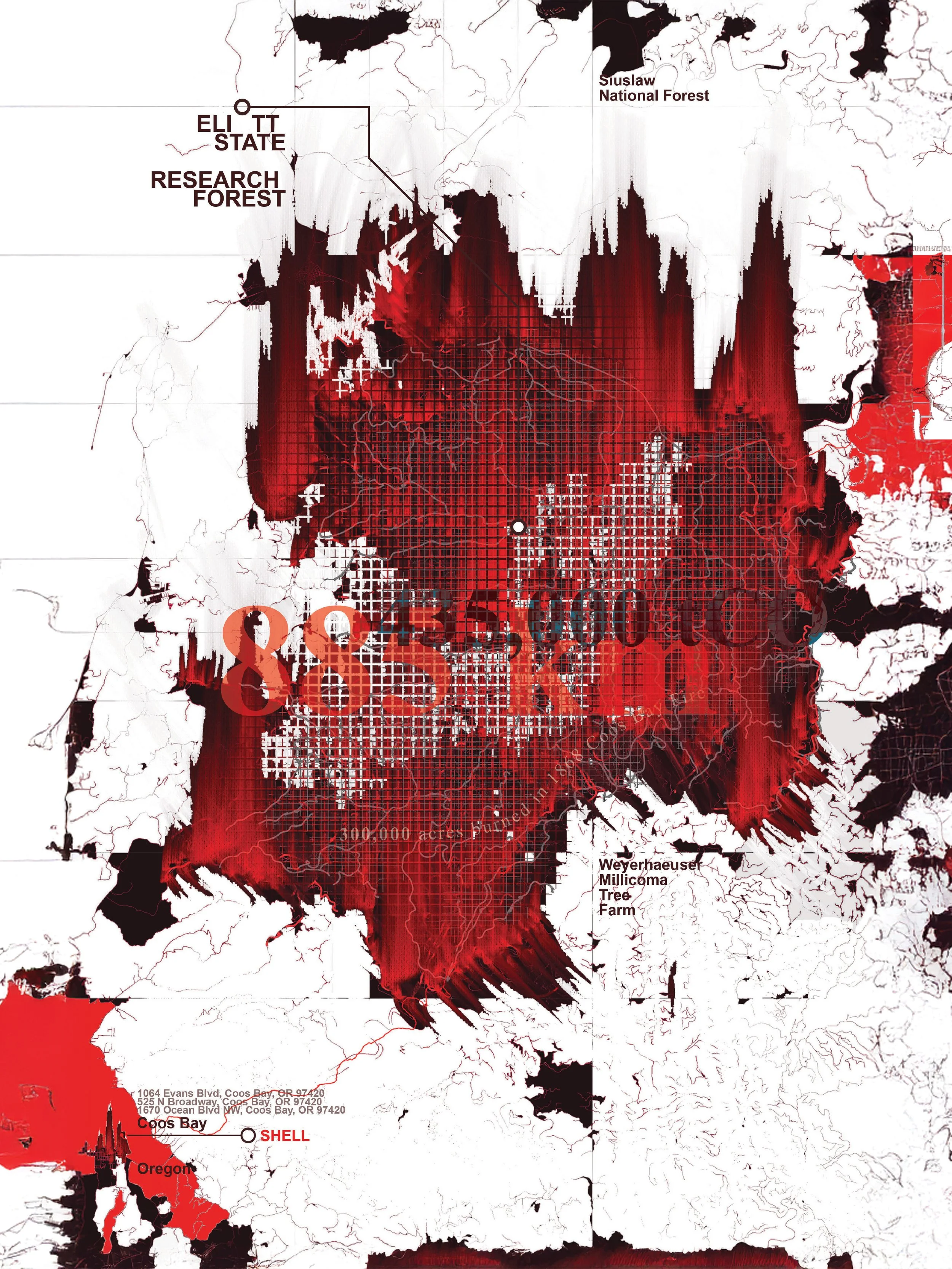
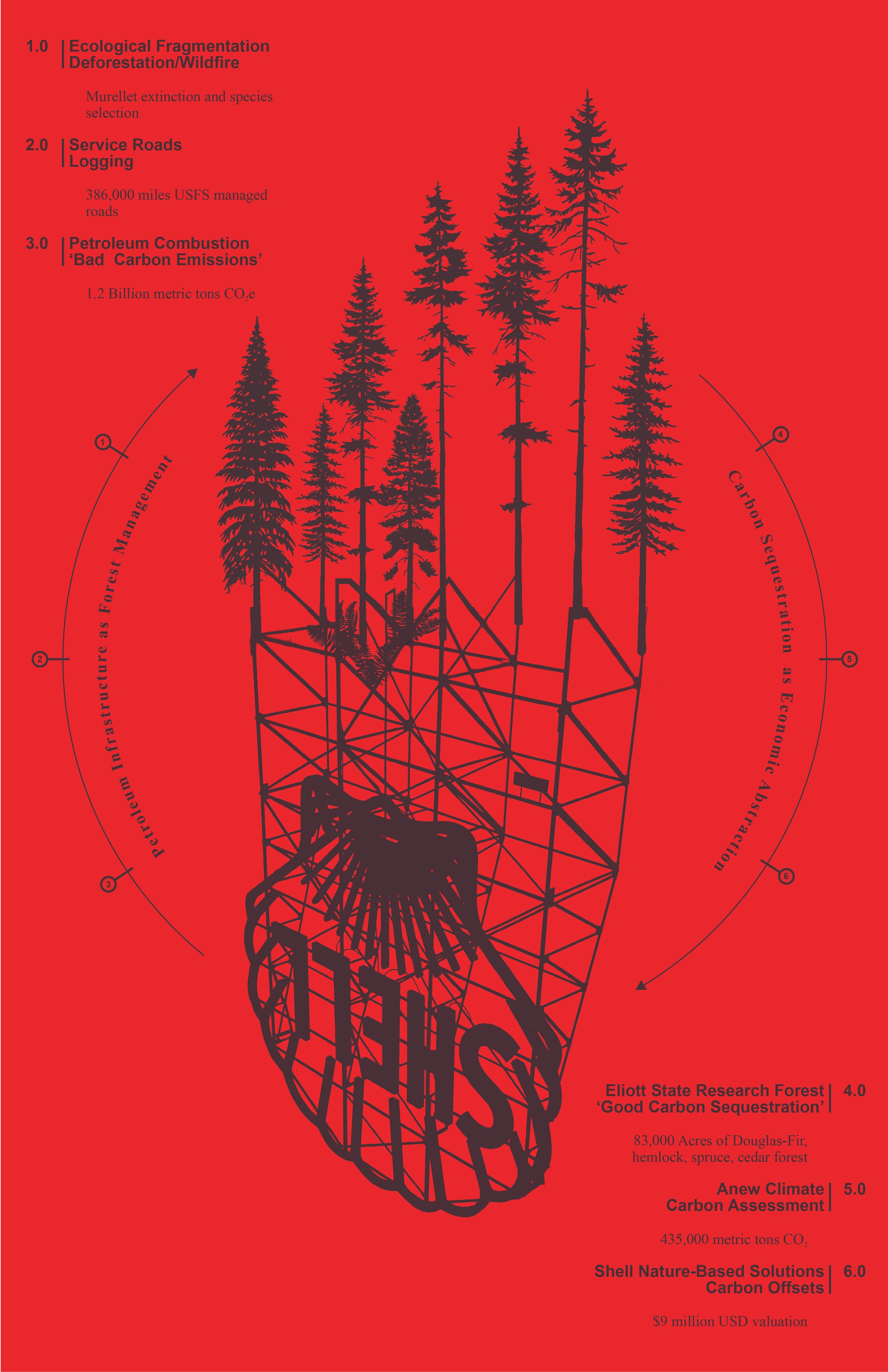
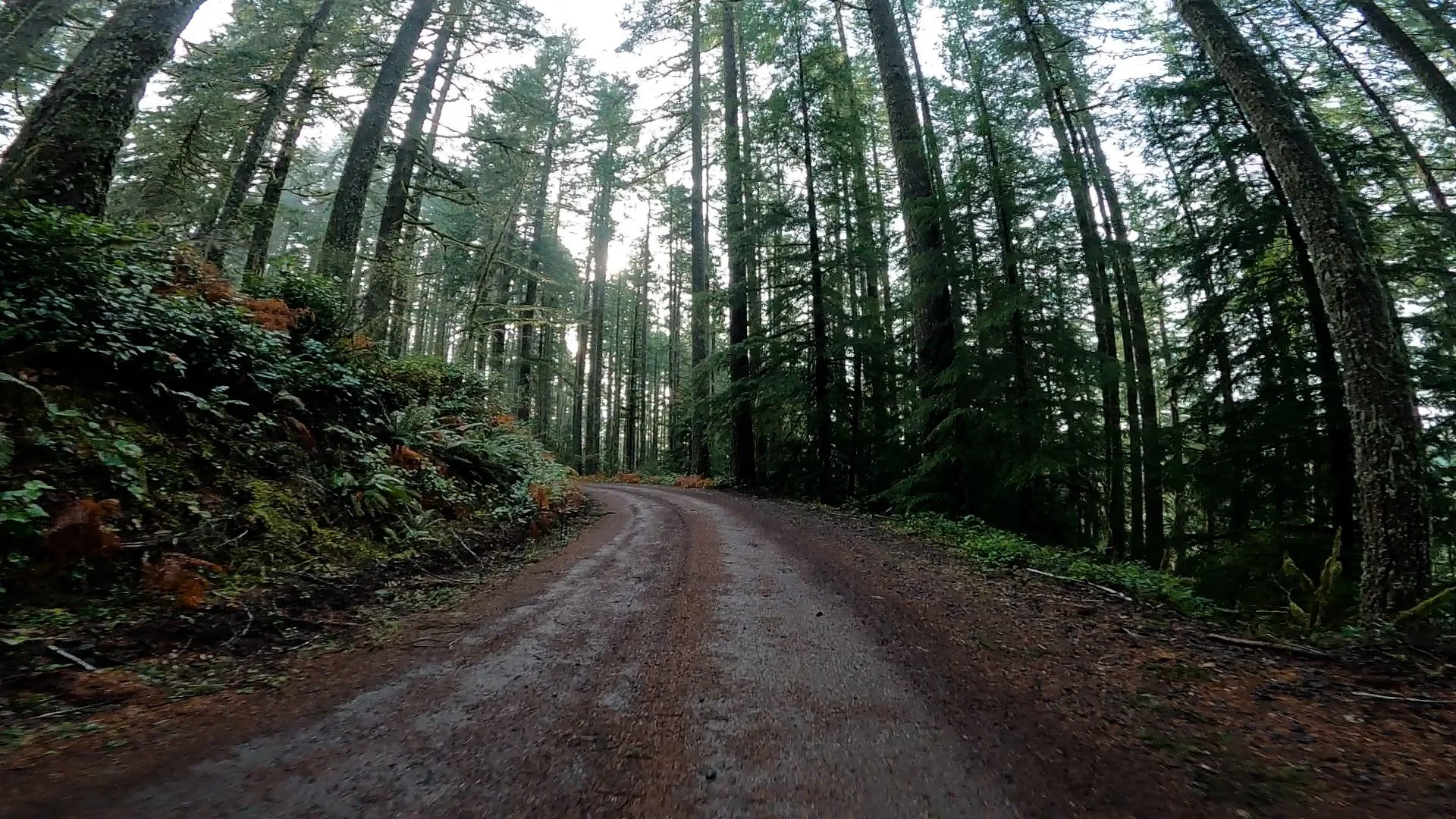


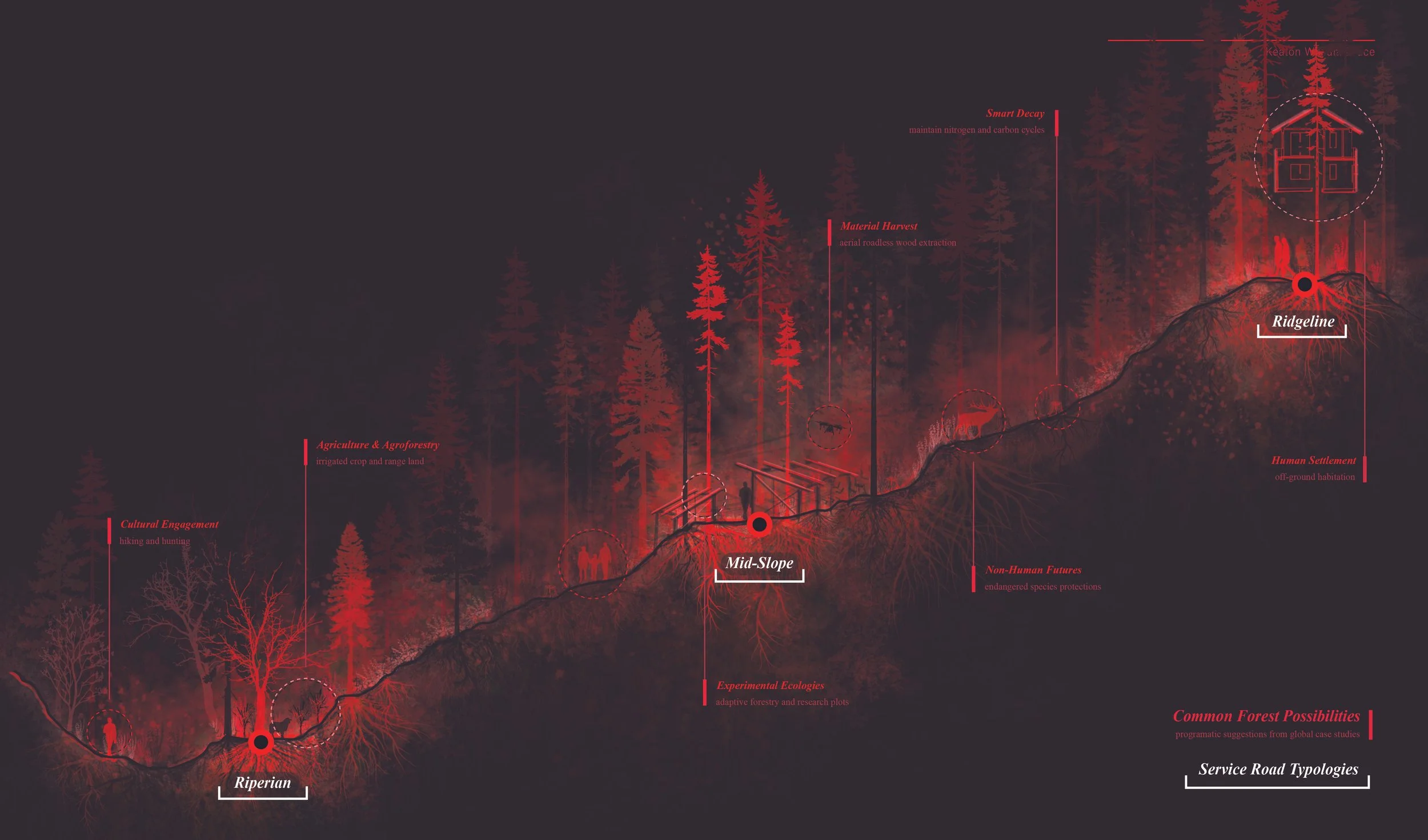
Our forest is a road.
Across the United States, forest landscapes are structured less by canopy or ecology than by infrastructures of access. The U.S. National Forest System alone encompasses approximately 193 million acres of land threaded by an estimated 370,000 miles of roads; a network whose total length exceeds that of the nation’s interstate and state highway systems combined. These roads are typically framed as secondary technical features that support management, extraction, or recreation. This guidebook argues instead that forest roads constitute the primary design condition of the contemporary American forest, operating as thickened lines through which ecological processes, governance structures, and destructive regimes of capital are materially maintained - a condition in need of redesign.
This project situates forest road networks within a longer carbon regime of petrochemical engagement with the landscape through The Shell Guide to Britain, a mid twentieth-century series of regional travel guides jointly published by Shell and BP. Among these, the Leicestershire volume authored by W. G. Hoskins is especially significant. Hoskins, a foundational figure in landscape history, used the guide format to articulate a method of reading landscape as historical evidence, foregrounding roads, field patterns, settlements, and industrial traces as records of human intervention. This approach would later be fully developed in The Making of the English Landscape, which argues that landscapes are cumulative cultural artifacts shaped by labor, infrastructure, and economic systems over time.
The guidebook uses the Eliott State Research Forest in Coos Bay, Oregon as a case study to highlight the utilization of spatial infrastructures in the maintenance of capital forestry regimes. In October 2024 the Oregon State Land Board approved a new Forest Management Plan for Eliott State Research Forest. To offset the management cost of reduced logging and increased ecosystem restoration, the plan entered the forest’s 83,000 acres into the voluntary carbon-credit market. Approved by Oregon voters and enforced by a contract signed in November of the same year with Anew Climate, the forest’s carbon will be evaluated and sold in the global market for a 40-year period with revenues (estimated between $7-12 million USD) returning to the Oregon State Land Board for the forest’s management costs, of which, one of the greatest priorities is road maintenance.
By reframing forest roads as thickened lines of capital, The Shell Guide to Forests argues that forest futures cannot be understood through canopy cover, biomass, or carbon metrics alone. Instead, they must be read through the infrastructures that make forests accessible, governable, and financially legible. The forest road emerges as a critical site for interrogating how capital persists within landscapes under the language of stewardship, and whether alternative forest futures are possible without confronting the infrastructures that have long made capital appear inevitable. The design research project unfolds as an impetus for reimagining service roads beyond capital in service of public access, ecological commoning, and decolonial futures.